Your AI coach.
Inside every trade.
Most trading journals tell you what went wrong after the session. Nexa tells you while it’s still happening — matching each trade against your own behavioral history the moment it closes. No generic advice.
14-day free trial • No card required • Cancel any time • Works with Tradovate, Rithmic & more
Create a new NinjaTrader account through our link and we’ll give you 28 days on TradeNexa — completely free. Double the standard trial.
The loop that builds consistency.
Most traders have a strategy. Almost none have a daily process. TradeNexa is the process.
Check your readiness score, confirm your mental state, and get Nexa's pre-session read before a single order goes in.
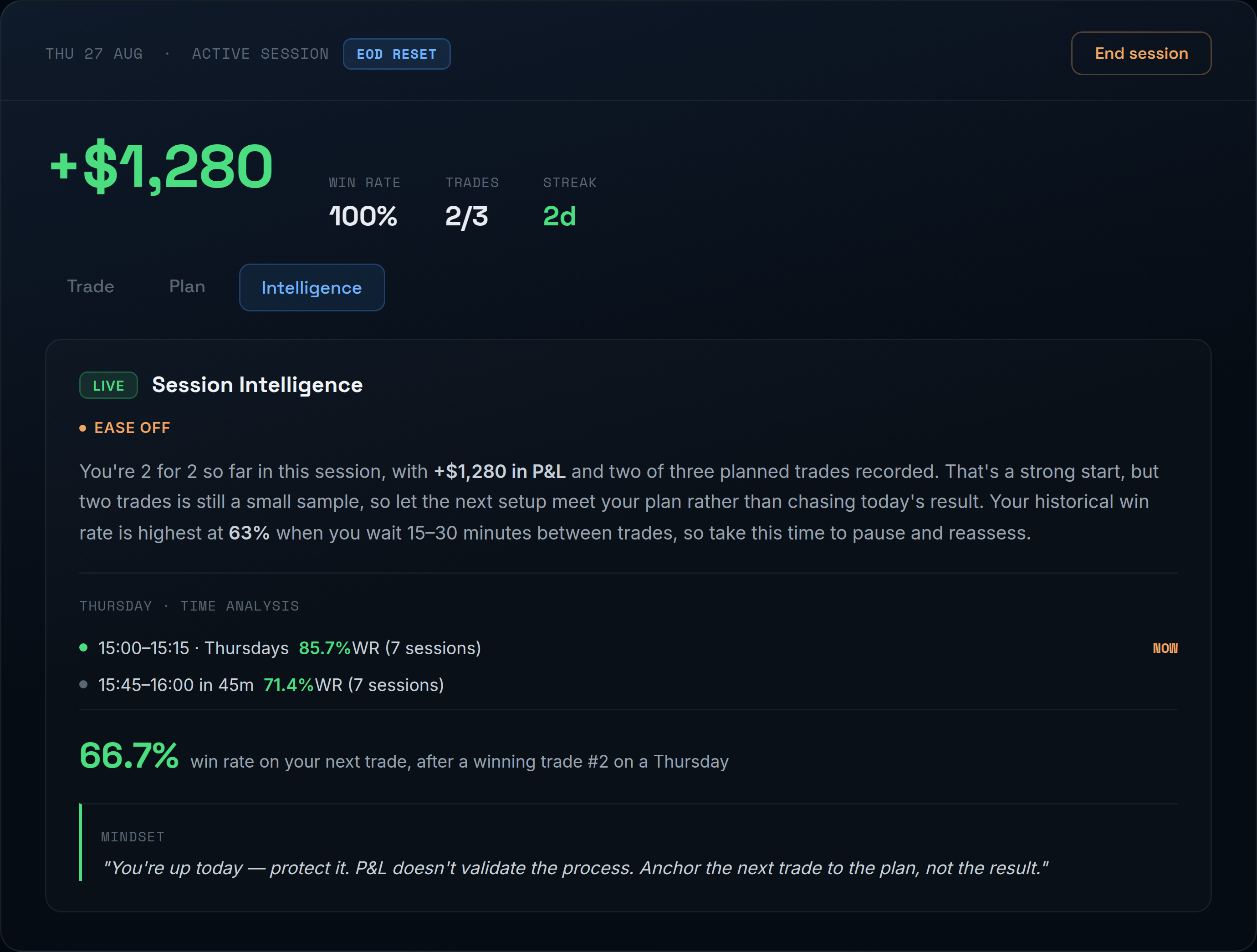
Nexa monitors every trade in real time — flagging behavioral patterns, enforcing your rules, and coaching as the session unfolds.
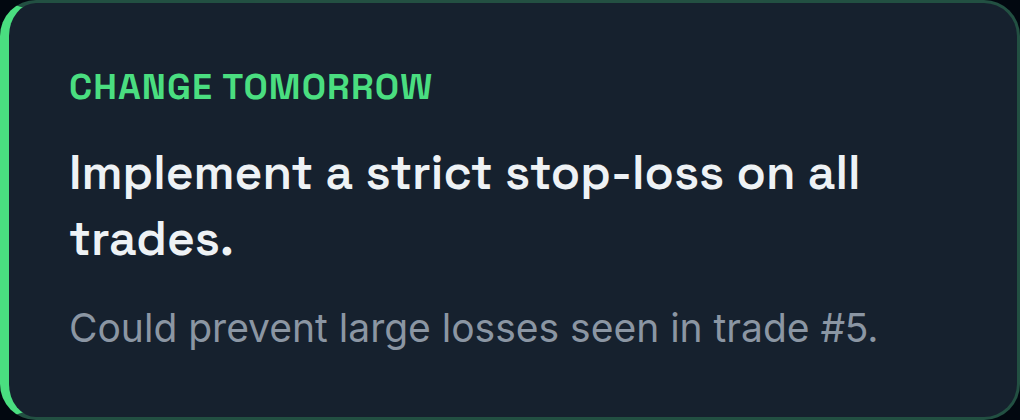
Review trades, complete a five-minute debrief, and let Nexa surface the one thing to change tomorrow.
Know if you should trade before the first order.
Every morning, Nexa scores your behavioral readiness across four dimensions — then gives you a pre-session read tailored to exactly where you stand today.
You’re steady today. Your plan is strongest in the first 90 minutes — wait for the setup and skip the mid-session noise. Pattern Avoidance is your weakest dimension this week; resist the second trade in any losing window.
Nexa coaches you while the market is open.
Not after it closes. Not when you ask. While it’s happening. Nexa reads the session as it unfolds and responds to what you actually do.
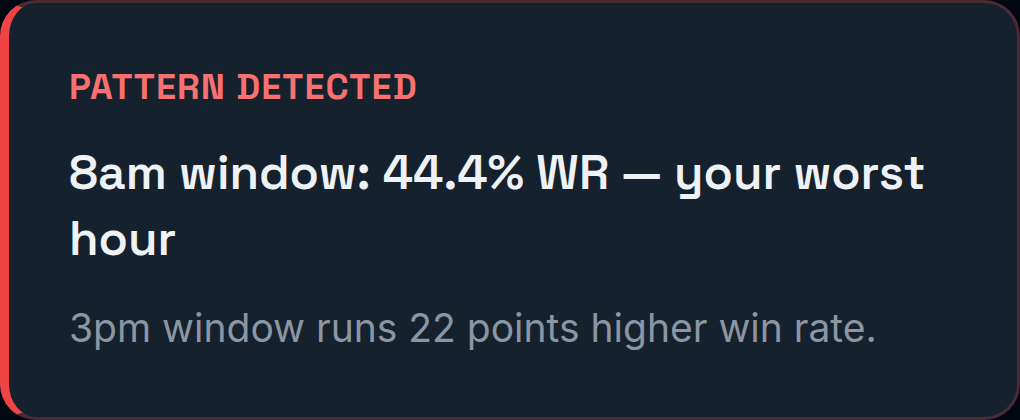
Nexa recognizes revenge entries, FOMO, size inflation, and the exact conditions that trigger each one — built from your own history.
Daily loss, trailing drawdown, max trades, and your prop firm's rules — all tracked live. Nexa warns you long before a breach.
When a Coach rule triggers, Nexa doesn't send a notification. It locks the session until the cooldown clears. No override. No dismiss.
You still take the trade anyway.
Session locked until cooldown clears.
The review most traders skip. Nexa makes it five minutes.
Consistency isn’t built in the session. It’s built in the five minutes after it — and in the pattern that compounds across weeks.
Real traders. Real patterns caught.
Proactive coaching isn’t a marketing claim — here’s what it looks like in practice.
Nexa noticed behavioural patterns while I was still in the session. It picked up that I was chasing moves after missing entries and warned me before I dug a bigger hole.
TradeNexa doesn't just store my trades — it explains my behaviour. It caught habits I'd repeated for months. Fixing just one of them had a noticeable impact.
The performance breakdown showed me I was profitable on longs but consistently giving money back on shorts. It changed how I approach every session now.
Start free. See your patterns within 24 hours.
No card required. Most traders see their most damaging pattern within the first week. At $29/month, identifying it once pays for itself.
Built for traders who want clarity over complexity
Most traders upgrade after seeing their first insights
Common questions
Everything you need before you start.
Stop Trading Blind.
See exactly what’s costing you money — before your next session.
14-day free trial • No card required • Cancel any time